Complete 2026 Guide to TDEE, Calorie Deficit, Skeletal Muscle & ABSI Calculations
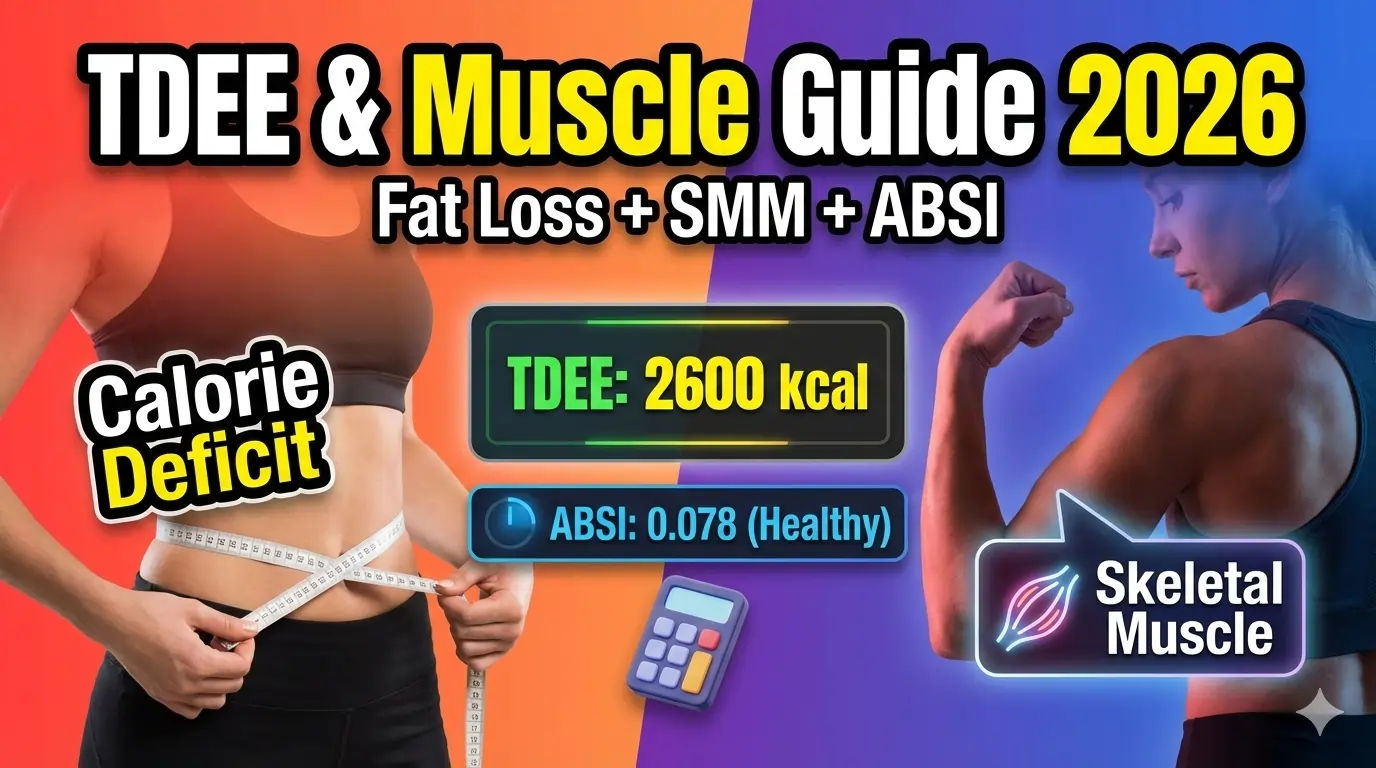
Understanding your body is the most powerful step in transforming it. In 2026, fitness is not about random dieting or copying workout plans from social media. It is about calculating your numbers accurately and making decisions based on data.
If you have been searching for terms like advanced TDEE calculator, calculate calorie deficit step by step, skeletal muscle mass calculator, extreme fat loss calculator, Alpert limit fat loss, or ABSI calculator, this guide will connect everything in one structured system.
Real progress begins with measurement.
Understanding TDEE for Weight Loss
TDEE, or Total Daily Energy Expenditure, is the total number of calories your body burns in a full day. It includes your resting metabolism, daily activity, exercise, and even digestion.
A TDEE calculator for weight loss helps you understand how many calories you need to maintain your current weight. Once you know this number, you can safely reduce calories to lose fat without damaging your metabolism.
An advanced TDEE calculator goes further than basic tools. It may include lean body mass, body fat percentage, and refined activity multipliers. This gives a more accurate calorie estimate, especially if you train regularly or have higher muscle mass.
Without knowing your TDEE, dieting becomes guesswork.
How to Calculate Calorie Deficit Properly
Many people ask how to calculate calorie deficit because they want structured fat loss.
The process is simple but must be done correctly. First, calculate your TDEE. Then decide your weekly fat loss goal. Since approximately 7700 calories equal 1 kilogram of body fat, you can divide that number based on your target.
For example, if your TDEE is 2500 calories and you want to lose half a kilogram per week, you would create roughly a 500 to 600 calorie daily deficit. That would place your intake around 1900 to 2000 calories per day.
A calorie deficit step by step approach ensures steady fat loss while protecting muscle mass. Extreme restriction often leads to fatigue and muscle breakdown.
Extreme Fat Loss Calculator and the Alpert Limit
When people search for extreme fat loss calculator or Alpert limit fat loss, they are usually looking for the fastest safe method.
The Alpert limit suggests that the maximum safe fat loss depends on how much body fat you currently carry. It estimates a biological ceiling for how much fat your body can release per day without harming lean tissue. This principle prevents aggressive dieting that causes muscle loss. Fat loss should be challenging but controlled. Sustainable transformation always beats rapid crash dieting.
Muscle Mass Calculator and Skeletal Muscle Tracking
Weight alone does not define progress. Many individuals search for muscle mass calculator or what is my muscle mass because they want deeper insight.
Skeletal muscle mass is the most important component of muscle for movement and metabolism. It directly affects how many calories you burn at rest. A skeletal muscle mass calculator or skeletal muscle kg calculator estimates how much of your body weight is functional muscle. This is important because during fat loss, your goal should be to maintain skeletal muscle while reducing fat.
If you are asking how to calculate skeletal muscle mass, one common method is to calculate lean body mass by subtracting fat mass from total body weight. From there, skeletal muscle is typically a percentage of lean mass.Tracking skeletal muscle mass in kg or in pounds helps you understand whether your training and nutrition strategy is working.
SMM Calculator and Performance Monitoring
SMM stands for Skeletal Muscle Mass. An SMM calculator allows you to monitor changes over time.
If your calorie intake is too low, SMM may decrease. If your protein intake and resistance training are effective, SMM should stay stable or gradually increase.
This is why combining a TDEE calculator weight loss strategy with muscle tracking is powerful. It ensures you are losing fat, not strength.
ABSI Calculator and Health Risk Evaluation
Beyond fat and muscle, body shape also matters. That is where the ABSI calculator becomes useful. ABSI, or A Body Shape Index, includes waist circumference in addition to height and weight. Unlike BMI alone, ABSI focuses on abdominal fat distribution.
High abdominal fat is linked to metabolic disorders and cardiovascular risk. Even if your BMI looks normal, a high ABSI score may indicate elevated health risk. An ABSI score calculator adds another layer of understanding to your fitness plan. It shifts the focus from appearance to long term health protection.
Connecting Everything Into One Strategy
A complete health plan in 2026 should follow a structured order.
First calculate your advanced TDEE.
Then determine your calorie deficit carefully.
Check that your deficit does not exceed safe fat loss limits.
Track skeletal muscle mass regularly.
Monitor waist measurements and ABSI score.
This approach creates a balance between fat loss, muscle preservation, and overall health.
When all these metrics work together, results become predictable.
Why Accurate Calculations Matter
Many people fail because they rely only on motivation. They reduce calories too much, lose muscle, regain fat, and repeat the cycle.
When you calculate properly, you gain control.
You know how many calories to eat.
You know how fast you can lose fat safely.
You know whether your skeletal muscle is increasing or decreasing.
You understand your long term health risk.
Numbers remove confusion.


